Can collagen really help relieve arthritis and joint pain? And which type of collagen works best?
You’ve likely heard of the wonders of collagen or perhaps already taken collagen supplements for your skin or gut health.
Long hailed as the ‘beauty booster’, collagen protein isn’t just a pretty face (so to speak). There’s a whole lot more to this protein that may help you manage your arthritis symptoms in a natural, complementary way.
Let’s dig into the science and find out how type II collagen specifically may help.
What is collagen?
Like the wooden framework that creates the structure for your home, collagen is a naturally occurring protein that gives your body strength and form. It’s found in your muscles, tendons, ligaments, bones and skin and makes up 30 to 40% of proteins in the human body.
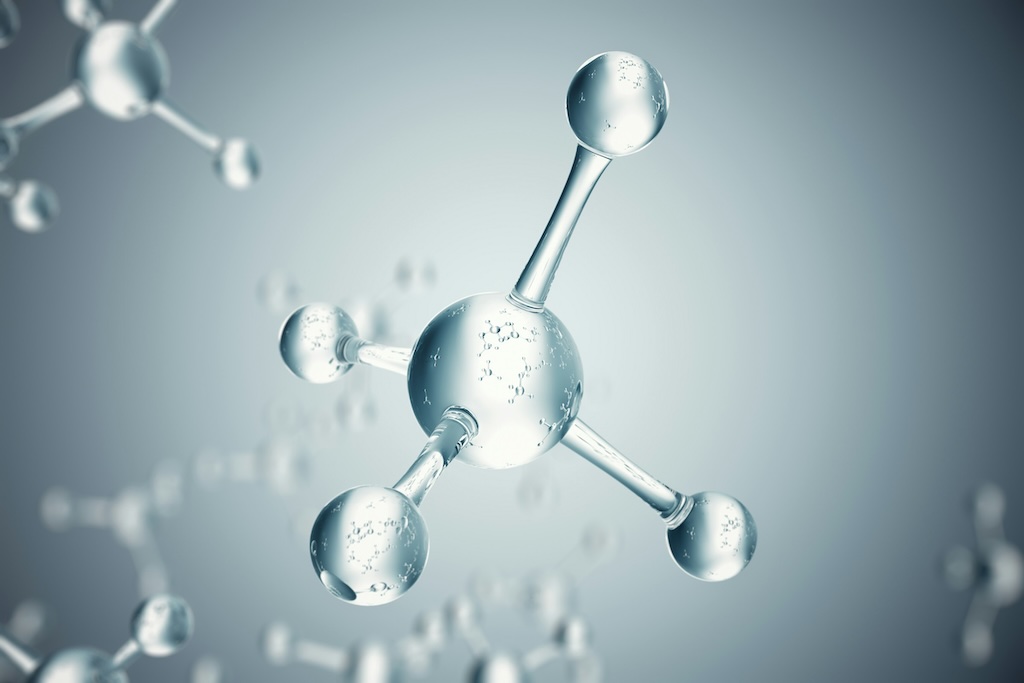
You can think of collagen like the glue that holds everything together in your body. The word itself actually comes from the Greek word “kolla”, which means glue.
Unfortunately, this powerful body scaffolding starts to break down after the age of 30 causing annoying little problems like nagging joint pain and sagging skin.
But it’s not all doom and gloom. Taking a collagen supplement can help repair body tissue by restoring the protein in your body.
The main types of collagen
There are at least 16 types of collagen but types 1, 2 and 3 account for 80 to 90% of the body’s total. Here are the most common types of collagen and what they can do for your body:
Type 1 – This type makes up around 90% of all the collagen in your body. This is the ‘beauty collagen’ that helps support healthy skin and keeps tissues and cells together in your bones, teeth, tendons and fibrous cartilage.
Type 2 – Your best friend if you have arthritis and joint pain, type 2 collagen is found in cartilage and helps to cushion your joints.
Type 3 – Like type 1, this collagen is found in porcine (pig) and bovine (cattle) collagen. It supports the structure of organs, arteries and muscles and also improves skin elasticity.
Signs your collagen levels are decreasing
So how do I know if my collagen levels are decreasing?
While collagen can’t be measured, your body will start to show signs that your levels are decreasing.
Some signs include:
- Wrinkles and sagging skin
- Shrinking, weakening muscles
- Osteoarthritis and joint pain
- Hallowed cheeks and eyes
- Joint stiffness and loss of mobility
- Gastrointestinal problems
- Blood flow problems
How type II collagen helps relieve arthritis pain
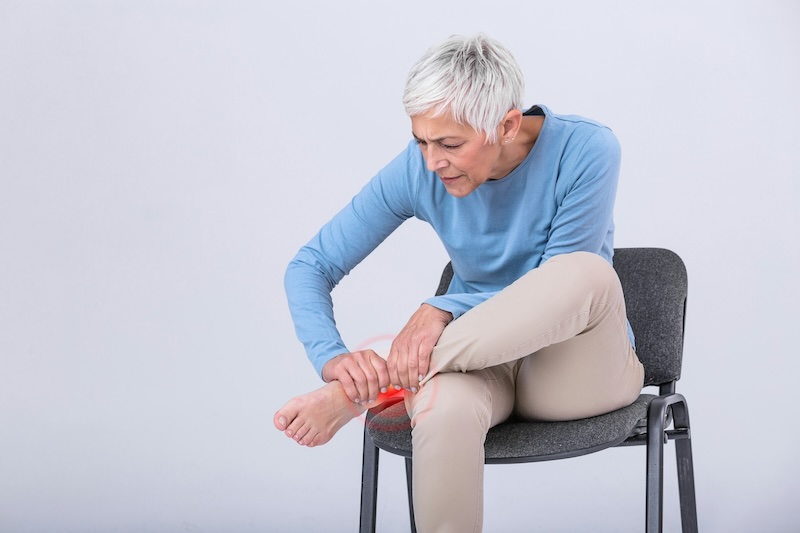
So, how does type II collagen actually help to relieve arthritis pain? Does it actually work?
When it comes to osteoarthritis, type 2 collagen has the most promising benefits for joint health. But the type of arthritis and the form of collagen make all the difference.
Let’s dig in.
There are several types of arthritis – osteoarthritis, rheumatoid arthritis, psoriatic arthritis, among others. Here we’ll focus on the most common forms, osteoarthritis and rheumatoid arthritis and how type II collagen can help.
Osteoarthritis
Osteoarthritis (OA) is a degenerative condition that breaks down cartilage over time through age, wear, injury or weight. Gradually, the bones of the joint may start rubbing directly against one another, causing severe pain. Articular cartilage, that smooth, white connective tissue that covers the ends of your bones at your joints, is affected in osteoarthritis and starts to break down.
How does type II collagen help OA?
Type II collagen is the main protein in articular cartilage. In fact, type II makes up 90 to 95% of the total collagen content in our joints (Pan et al., 2023). As cartilage starts breaking down, so does the collagen — and that’s where supplementation comes in.
What the studies show
Clinical trials have shown significant reductions in pain and stiffness in OA patients, and type II collagen has been shown to work better than glucosamine and chondroitin in reducing joint pain and improving mobility (Gencoglu et al., 2020).
But before you reach for any old collagen supplement off the shelf, it’s important to understand that the form of the collagen makes a difference in how effective it is.
Why the Form of Collagen Matters — Undenatured vs Denatured
To get the best results, the form of collagen matters.
If you’ve tried collagen supplements before and not noticed much difference in your joint pain, this might be why. Most brands of collagen you find in supermarkets and chemists are hydrolysed, or also known as collagen peptides. These can be great for hair, skin and nails, but not for joint pain and arthritis, specifically.
Denatured collagen
Denatured collagen — which includes collagen hydrolysates, most powders and bone broth — has had its 3D helix structure broken down by enzymes or heat during processing (Martínez-Puig et al., 2023).
This means the process has broken down the natural structure of the collagen and it’s this intact structure that makes type Ii collagen especially effective for joints.
But this doesn’t make collagen peptides all bad. The denatured form of collagen can still be helpful as a building block supplement which provides amino acids.
Undenatured collagen
Think of undenatured collagen as natural and untouched. It’s collagen in its pure form with the triple helix structure intact. This is important as it’s the fully natural and intact nature of this form that the Peyer’s patches in the gut need to recognise it and trigger the anti-inflammatory response (Gencoglu et al., 2020).
What to look for
Most collagen supplements on the market are denatured and most labels won’t make this denatured vs undenatured distinction obvious, so it’s worth knowing what you’re looking for.
Is Type II Collagen Found in Shark Cartilage?
Pure marine collagen, like South Australian Shark Cartilage, is a natural, unprocessed source of type II collagen.
Why marine collagen is best for arthritis
Sharks have a fully cartilaginous skeleton, unlike humans and other mammals, where only parts of their structure are made of cartilage. This means shark cartilage is a naturally rich source of type II collagen (marine collagen). It is also a source of naturally occurring chondroitin sulfate, another compound that has anti-inflammatory benefits for joint pain.
Unlike bovine collagen, marine collagen doesn’t carry the risk of mad cow disease or other land-animal disease transmission.
Researchers are increasingly looking to marine sources of collagen as safer, cleaner alternatives to traditional land-animal sources. Marine type II collagen is showing particular promise for joint health (Frontiers in Marine Science, 2023).
The science on shark cartilage
In a 2023 study, Pan et al. confirmed that type II collagen was successfully isolated from blue shark cartilage with its natural structure (triple helix structure) undamaged and fully preserved. This is crucial for the oral tolerance mechanism to work so that the collagen can work its anti-inflammatory magic on the joints. (Pan et al., 2023).
The collagen they extracted also showed high levels of glycine and hydroxyproline, two amino acids that are most critical for cartilage repair and stability.
What the studies show
This theory was tested in a 2013 study on arthritic rats. The rats were given an oral administration of type II collagen from shark cartilage and the researchers found this reduced the joint inflammation in the rats via oral tolerance Zhu et al. (2013), PMC.
Sustainably-sourced
South Australian shark cartilage is sourced as a byproduct of commercial fishing, which means sharks are not directly targeted for the product. This makes it a resource-efficient, low-waste source as the cartilage would otherwise be discarded (Pan et al., 2023).
Is it safe to take?
According to WebMD, type II collagen supplements are possibly safe when used in the short-term. Some people may experience stomach problems or allergies, so it’s best to trial safely.
Shark cartilage supplements are generally considered well-tolerated when used as directed. It can be taken safely for up to 40 months, after which time it’s best to consult with your doctor.
The side effects of shark cartilage are usually mild and infrequent. They can include:
- stomach upsets
- constipation
- unusual taste in mouth.
As with any supplement, consult your healthcare provider before starting — particularly if you are pregnant, breastfeeding or taking medication.
Adding more collagen to your diet
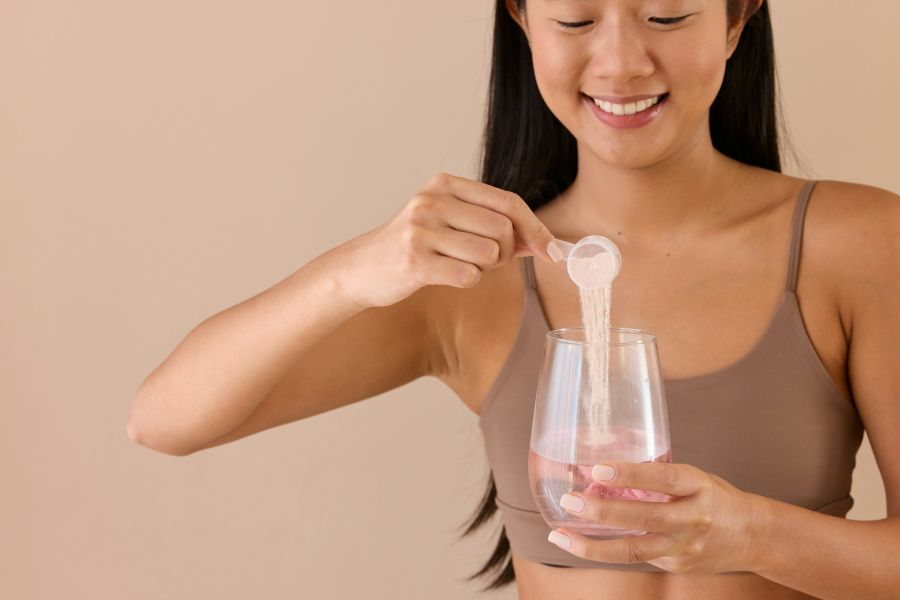
If you’re thinking of investing in a collagen supplement, it’s important to first check with a health professional. If you have any kind of seafood allergies, you may have a problem with marine collagen. You’ll also need to investigate which type of collagen is best suited for your body and needs.
Try South Australian Shark Cartilage
South Australian Shark Cartilage is a naturally and ethically-sourced, chemical-free form of type II collagen. It comes in capsule form (100 capsules and 400 capsules) and powder form.
You can buy our product here:
100 capsules
400 capsules
Powder 200g
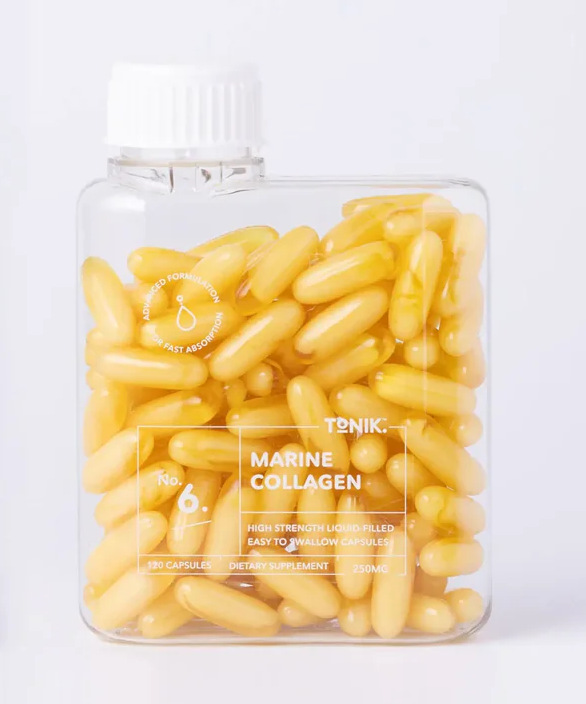
New Tonik Marine Collagen Capsules
We now sell high-strength marine collagen capsules through Tonik.
These are an advanced marine collagen complex with naturally occurring peptides to support healthy skin, strong hair and nails, and promote youthful skin elasticity.
At SASC, we only provide you with clean, science-backed and Australian-made products to support your health and wellbeing. Tonik’s Marine Collagen capsules meet our rigorous standards.
- Nutritional Food Grade – Therapeutic doses, not token amounts
- Clean Formulas – No fillers, binders, or artificial additives
- Science-backed – Every ingredient is research-supported
- Australian-made – Quality tested & assured
You can buy Tonik Marine Collagen capsules here.
If you have any questions about the product, please don’t hesitate to contact us.
Sources
- Pan, Z. et al. (2023). Isolation and Biochemical Properties of Type II Collagen from Blue Shark (Prionace glauca) Cartilage. Marine Drugs. https://pmc.ncbi.nlm.nih.gov/articles/PMC10222689/
- Gencoglu, H. et al. (2020). Undenatured Type II Collagen (UC-II) in Joint Health and Disease. PMC. https://pmc.ncbi.nlm.nih.gov/articles/PMC7222752/
- Trentham, D.E. et al. (1993). Effects of Oral Administration of Type II Collagen on Rheumatoid Arthritis. Science. https://www.science.org/doi/10.1126/science.8378772
- Martínez-Puig, D. et al. (2023). Collagen Supplementation for Joint Health: The Link between Composition and Scientific Knowledge. PMC. https://pmc.ncbi.nlm.nih.gov/articles/PMC10058045/
- Zhu, X. et al. (2013). Oral Administration of Shark Type II Collagen Suppresses Complete Freund’s Adjuvant-Induced Rheumatoid Arthritis in Rats. PMC. https://pmc.ncbi.nlm.nih.gov/articles/PMC3763645/
- Frontiers in Marine Science (2023). Marine Collagen: Purification, Properties and Application. https://www.frontiersin.org/journals/marine-science/articles/10.3389/fmars.2023.1245077/full
- WebMD. Collagen Type II (Native) — Uses, Side Effects and More. https://www.webmd.com/vitamins/ai/ingredientmono-714/collagen-type-ii-native
Further Reading
- Arthritis Foundation — Are Collagen Supplements Helpful for Arthritis? https://www.arthritis.org/health-wellness/treatment/complementary-therapies/supplements-and-vitamins/can-collagen-supplements-help-arthritis
- Arthritis Foundation — 12 Supplements for Osteoarthritis https://www.arthritis.org/health-wellness/treatment/complementary-therapies/supplements-and-vitamins/12-supplements-for-osteoarthritis
- Examine.com — Type II Collagen https://examine.com/supplements/type-ii-collagen/
- Nutraviva — Undenatured vs Hydrolysed Collagen for Joint Health https://nutraviva.com.au/blogs/news/the-science-behind-collagen-for-joint-health-undenatured-vs-hydrolysed-collagen
- Cleveland Clinic — Collagen https://my.clevelandclinic.org/health/articles/23089-collagen
- Vitality and Wellness — 11 Clinical Signs of Collagen Deficiency https://www.vitalityandwellness.com.au/blogs/health-matters/11-clinical-signs-of-collagen-deficiency