Turmeric vs Curcumin – What’s the difference?
So what is this thing called curcumin exactly? And is it turmeric that has all the health benefits or curcumin? Which is what is which?
If you’re a bit lost, don’t worry, we were too. So we decided to dig in and get to the root of what turmeric and its bevy of benefits are all about.
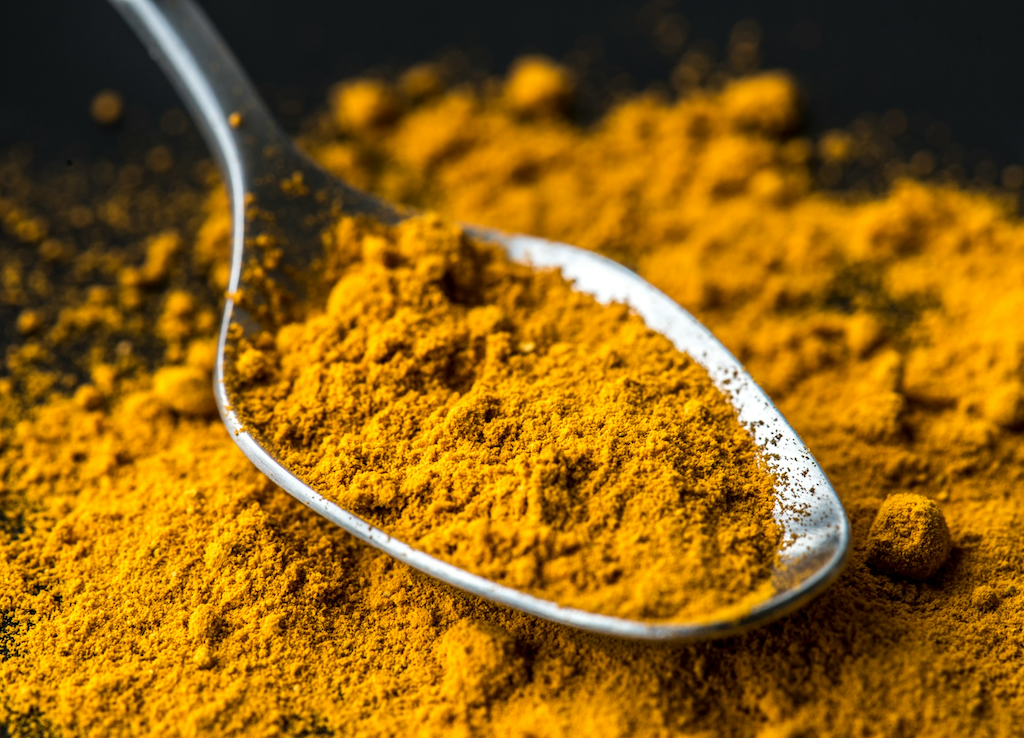
Turmeric is the bright golden-yellow spice derived from the root of the Curcuma longa plant. This vibrant, multi-talented herb has been used for thousands of years in South Asian cuisine and traditional Chinese and Ayurvedic medicine, but it’s stubborn brightness also shows up in Indian rituals and weddings and is even used to dye garments and sacred cloths.
Curcumin is an active compound in turmeric which gives it its vibrant colour but also has powerful anti-inflammatory and antioxidant properties. It’s the power compound most relevant to your joint health — and the reason this ancient spice is now showing up in clinical trials alongside pharmaceutical painkillers.

Adding turmeric to your cooking is definitely worthwhile, but throwing it in smoothies and muffins will not give you the anti-inflammatory benefits you need. Turmeric only contains 2 to 9 per cent of curcumin, so it’s best to supplement for a more efficient gain. Dr. Horwitz from the University of Arizona College of Medicine says to look for turmeric supplements that say, “standardized to 95% curcuminoids”.
But before you rush out to your nearest healthfood store, there’s a whole lot more to curcumin and how it helps relieve arthritis pain. Taking curcumin alone isn’t enough to make a real difference. It needs a couple of sidekicks to boost its effects on your joints and overall health.
Let’s keep digging and unearth a little user-friendly science.
How curcumin targets arthritis pain and inflammation
Curcumin helps to relieve arthritis pain by acting as an anti-inflammatory and antioxidant, two key drivers of arthritis joint pain. Research has shown that curcumin “…can reduce arthritis symptoms — mainly pain and inflammation — and result in similar improvements as ibuprofen and diclofenac sodium.” (Daily, Yang & Park (2016), Journal of Medicinal Food)
Arthritis was once considered a ‘wear and tear’ problem, but science now shows that inflammation and oxidative stress play major roles in driving the disease process.
The inflammation loop
Initially, osteoarthritis starts out as age or injury related cartilage breakdown, which then triggers inflammation around the joint. The inflammation is the body’s natural healing response. It attemps to protect and repair the damage, but ironically this inflammation creates a loop effect, called chronic inflammation, which breaks down more cartilage.
Oxidative stress adds to the loop, a process by which free radicals, unstable molecules caused by inflammation, cause further damage to the joint tissue.
Source: Arthritis Foundation (arthritis.org) | Healthdirect Australia (healthdirect.gov.au) | NPS MedicineWise (nps.org.au)

Curcumin targets the same inflammation pathway as ibuprofen, but without the stomach damage that comes with long-term NSAID use. It helps to block a key molecular switch that drives chronic inflammation without disrupting the enzyme that protects the stomach lining.
The wonderful thing about curcumin though, is it works at the site of inflammation and lowers specfic inflammatory proteins circulating in the joint. These proteins signal pain and drive futher cartilage breakdown – and curcumin acts like a zen monk, calming down the pain signals.
Curcumin also acts as an antioxidant and neutralises free radicals– those pesky unstable molecues that wreak havoc on your joints and healthy tissue.
But curcumin doesn’t work so well in isolation. It needs a little help to actually get into your bloodstream and do its job.
How to get curcumin to work effectively – the bioavailability problem
The curcumin in turmeric needs a little help to unlock its multitude of health benefits, including improving arthritis symptoms. Unfortunately, a bit of turmeric tossed into your meals or smoothies won’t do the trick because curcumin alone is not easily absorbed by the body and gets excreted through the liver quickly.
Curcumin with piperine
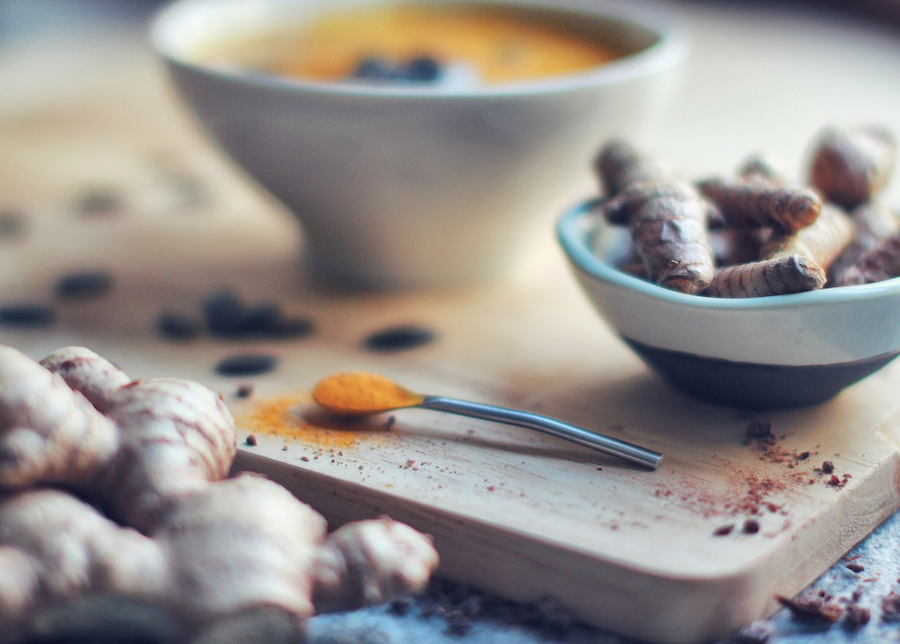
To help it stay in the system and work its wonders, it needs some assistance from piperine – black pepper extract.
When taken with piperine, the bioavailability of curcumin increases by 2,000%!
A landmark study done in 1998 by Shobab et al proved this by giving one group of people curcumin on its own and one group curcumin with piperine. Blood measurements showed that the piperine group had dramatically higher levels of curcumin in the bloodstream — meaning more of it was actually getting through to do its job.
Piperine does this by inhibiting metabolic enzymes in the liver and intestinal wall that break down curcumin .
You’re best bet to get the most out of turmeric is to buy a turmeric/curcumin supplement with piperine added. Or, when adding turmeric to your meals, like scrambled eggs or vegetables, make sure to include pepper.
Note – if you are on any medication, piperine may not work so well in combination with curcumin. This is because black pepper has the potential to slow the metabolism of pharmaceuticals, causing an accumulation of drugs in the system and possibly blunting the health benefits of curcumin.
This is where Tumerones come in.
Curcumin with turmerones
Turmerones are naturally occurring essential oil compounds found in turmeric that also enhance absorption of curcumin. These oils have a similar effect as piperine in helping the body absorb curcumin more effectively, but with a different mechanism at play.
Turmerones work by increasing how much curcumin actually gets transported through the intestinal wall into the bloodstream in the first place.
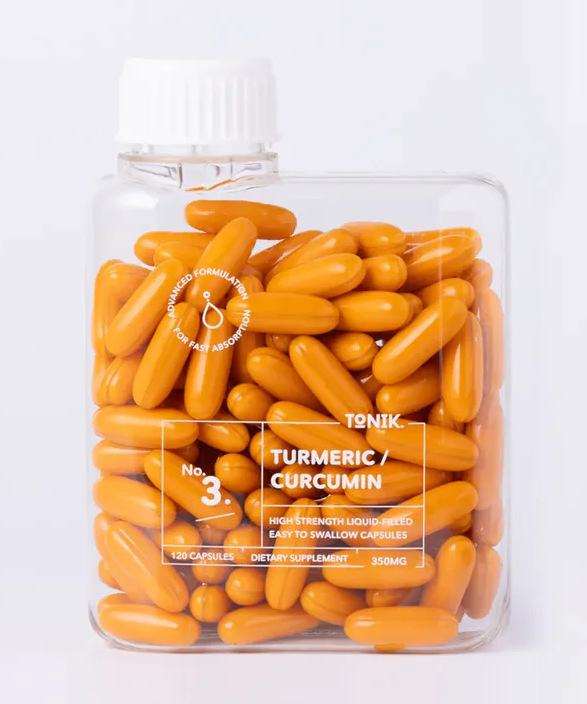
Introducing
Tonik Turmeric/Curcumin Capsules
With Turmerones
Support your joint health and flexibility with the powerful anti-inflammatory properties of turmeric/curcumin.
And if you’re already taking shark cartilage for your joints, you’ll be interested to know what happens when you combine it with curcumin.
Turmeric with shark cartilage - a powerful combo
If you’re a fan of taking shark cartilage for your joint pain and arthritis management, you can amplify the effects by taking it in combination with a curcumin supplement.
The chondroitin sulfate in shark cartilage targets the same inflammatory pathway as curcumin found in turmeric.
The two compounds in combination are a power couple, hitting the pathway harder and reducing joint swelling while protecting cartilage and supporting joint repair more effectively.
The evidence?
A 2016 human clinical trial found that combining curcumin with chondroitin and glucosamine reduced pain during movement significantly more than placebo.
In the trial, 26 patients with knee osteoarthritis took two daily supplements containing chondroiten sulfate, glucosamine and bio-curcumin, along with physical therapy. 27 patients took a placebo alongside the same phyiscal therapy. The supplement group scored better at the end of the trial in reducing pain, particularly showing greater improvement in pain during movement after 8 weeks of treatment.
While this research is promising, most studies combining curcumin and chondroitin are still in early stages — but the direction is clear: these two compounds appear to work better together than either one alone (Sterzi et al., 2016).
What the research says
Studies into the effects of curcumin on arthritis pain have shown some exciting results over the last few years.
Let’s take a look at some key studies.
Study 1: Turmeric vs Ibuprofen (2014) – Kuptniratsaikul et al.
This study was fascinating! It proved that a natural supplement could have the same pain-relieving effect as an over-the-counter medication like ibuprofen, but without the damage to the gut.
367 patients with knee osteoarthritis were split into two groups. One group took 1,500 of turmeric extract daily and the other took 1,200 mg of Ibuprofen daily for 4 weeks. Both groups experienced an equivalent improvement in pain, function and stiffness, but stomach complaints were significantly higher in the ibuprofen group.
The study showed that a natural plant extract matched a pharmaceutical painkiller in terms of pain relief and functional improvement. Turmeric comes out on top, though, with fewer gut side effects than ibuprofen.
Study 2: The Australian Study (2021) – Lopresti et al.
The power of curcumin was proven again in this Australian study in Perth at Murdoch University.
51 people took 500mg of curcumin extract twice a day for 8 weeks. Another 50 people took a placebo capsule. The results were measured by knee pain scores and physical performance tests, including a 6-minute walk and timed get-up-and-go test.
Curcumin came out on top, with that group showing a significantly greater reduction in knee pain scores. They also walked further and moved faster on performance tests compared to the placebo group. Also, 37% of the curcumin group were able to cut back on their pain medication, compared to just 13% in the placebo group.
Is it safe? Side effects and contraindications
Curcumin supplements are generally well-tolerated at the recommended doses of up to 1,200mg a day for up to 4 months (Daily et al., 2016).
However, curcumin can interact with blood thinners such as warfarin, aspirin or clopodogrel. If you’re taking blood-thinning medications like these, it’s best to consult with your doctor before taking curcumin supplements, as they may enhance the blood-thinning effect.
It’s also best to avoid curcumin supplements if you’re:
- pregnant
- about to have surgery
- have gallbladder disease.
It’s important to consult with a healthcare professional before starting supplementation.
New Tonik Turmeric/Curcumin Capsules
With Tumerones!
We now sell a premium turmeric complex with naturally occurring curcumin to support healthy joints, ease inflammation and boost overall wellbeing.
These Turmeric Capsules deliver the power of high-strength curcumin, combined with naturally occurring turmerones to boost absorption and effectiveness, all in an easy, convenient capsule. Each dose works to ease inflammation, support joint health, and promote overall wellbeing.
- Nutritional Food Grade | Therapeutic doses, not token amounts
- Clean Formulas | No fillers, binders, or artificial additives
- Science Backed | Every ingredient is research supported
- Australian Made | Quality tested & assured
You can buy Tonik Turmeric Capsules here.
If you have any questions about the product, please don’t hesitate to contact us.
Sources
- Pan, Z. et al. (2023). Isolation and Biochemical Properties of Type II Collagen from Blue Shark (Prionace glauca) Cartilage. Marine Drugs. https://pmc.ncbi.nlm.nih.gov/articles/PMC10222689/
- Gencoglu, H. et al. (2020). Undenatured Type II Collagen (UC-II) in Joint Health and Disease. PMC. https://pmc.ncbi.nlm.nih.gov/articles/PMC7222752/
- Trentham, D.E. et al. (1993). Effects of Oral Administration of Type II Collagen on Rheumatoid Arthritis. Science. https://www.science.org/doi/10.1126/science.8378772
- Martínez-Puig, D. et al. (2023). Collagen Supplementation for Joint Health: The Link between Composition and Scientific Knowledge. PMC. https://pmc.ncbi.nlm.nih.gov/articles/PMC10058045/
- Zhu, X. et al. (2013). Oral Administration of Shark Type II Collagen Suppresses Complete Freund’s Adjuvant-Induced Rheumatoid Arthritis in Rats. PMC. https://pmc.ncbi.nlm.nih.gov/articles/PMC3763645/
- Frontiers in Marine Science (2023). Marine Collagen: Purification, Properties and Application. https://www.frontiersin.org/journals/marine-science/articles/10.3389/fmars.2023.1245077/full
- WebMD. Collagen Type II (Native) — Uses, Side Effects and More. https://www.webmd.com/vitamins/ai/ingredientmono-714/collagen-type-ii-native
Further Reading
- Arthritis Foundation — Are Collagen Supplements Helpful for Arthritis? https://www.arthritis.org/health-wellness/treatment/complementary-therapies/supplements-and-vitamins/can-collagen-supplements-help-arthritis
- Arthritis Foundation — 12 Supplements for Osteoarthritis https://www.arthritis.org/health-wellness/treatment/complementary-therapies/supplements-and-vitamins/12-supplements-for-osteoarthritis
- Examine.com — Type II Collagen https://examine.com/supplements/type-ii-collagen/
- Nutraviva — Undenatured vs Hydrolysed Collagen for Joint Health https://nutraviva.com.au/blogs/news/the-science-behind-collagen-for-joint-health-undenatured-vs-hydrolysed-collagen
- Cleveland Clinic — Collagen https://my.clevelandclinic.org/health/articles/23089-collagen
- Vitality and Wellness — 11 Clinical Signs of Collagen Deficiency https://www.vitalityandwellness.com.au/blogs/health-matters/11-clinical-signs-of-collagen-deficiency
- WebMD — Shark Cartilage https://www.webmd.com/vitamins/ai/ingredientmono-909/shark-cartilage